
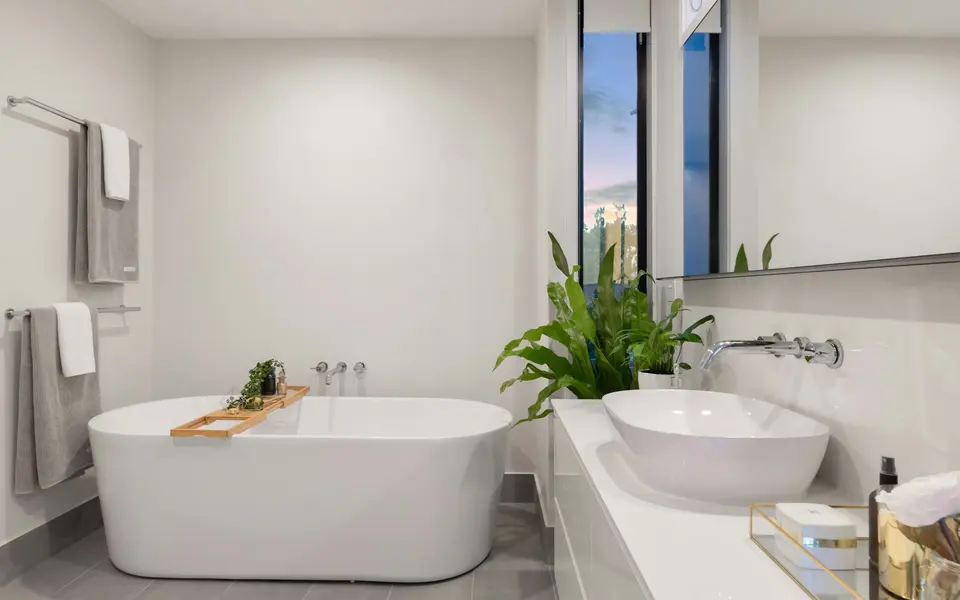
A spa bathroom is rarely about a bigger tub. It is about removing the things that make a small room feel busy: bad light, cold surfaces, noisy fans, and storage that never quite contains anything. Fix those first and the calm arrives almost by itself.
Waterproofing before beauty
Everything else is cosmetic compared with a correctly built wet area. A proper shower requires a sloped substrate, a bonded waterproof membrane, reinforced corners, and a drain that can be serviced. If your contractor suggests tiling directly onto a repaired screed, ask for the membrane specification in writing.
Waterproofing is also the one place where spending more is almost always justified. The difference between a good and a poor membrane is small compared with the cost of removing a floor.
Ventilation you cannot hear
Moisture needs somewhere to go. Choose an extractor rated for the room volume, duct it outside rather than into the roof space, and put it on a timer or humidity sensor. A quiet fan running for twenty minutes after a shower does more than a loud one switched off after two.
Fewer materials, better
The most convincing spa bathrooms use two or three materials, not six. Large-format stone or porcelain reduces grout lines and visual noise. Warm wood — real or a good moisture-tolerant alternative — softens the room. A single accent, such as brushed brass or matte black, is enough.
- Use large tiles on walls to make the room feel wider.
- Keep the floor tile slightly darker than the walls for grounding.
- Choose a matte finish underfoot and a softer sheen on the walls.
Light in layers
One ceiling light flatters nobody. Combine a soft general light, a brighter task light at the mirror, and a low accent light near the bath or shower. Warm white bulbs around 2700K feel calmer than cool white, and a dimmer on the main circuit is the cheapest luxury in the room.
A five-step plan
- Fix leaks, drainage, and ventilation before choosing finishes.
- Decide the shower and vanity positions, then protect them.
- Limit the palette to two main materials plus one accent.
- Add layered lighting and a quiet extractor.
- Finish with textiles, a hook, and somewhere to put a towel.