
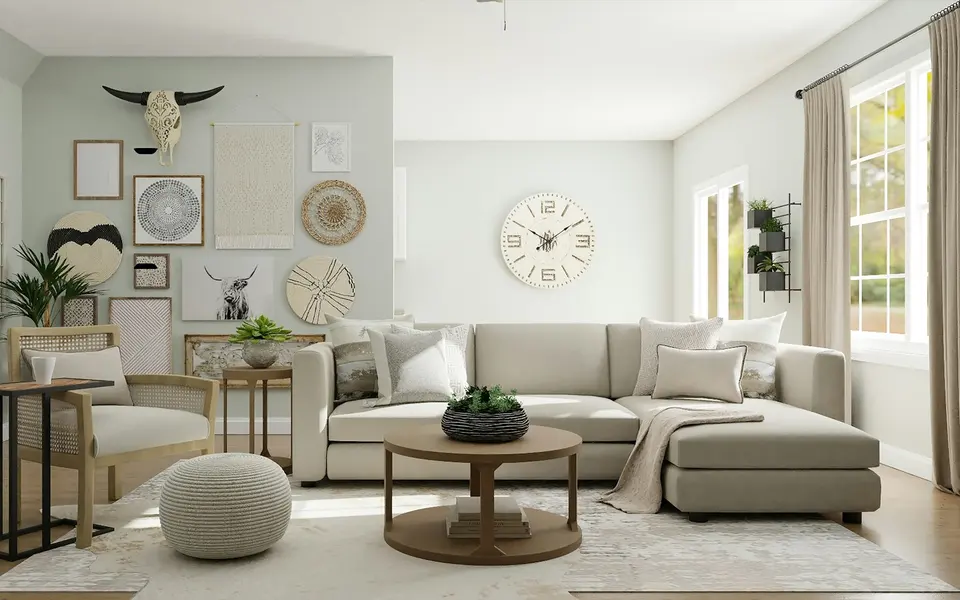
Good storage in a small home is not about adding more boxes. It is about removing decisions. When everything has a place, a room stops asking for attention. The goal is storage that reads as architecture rather than furniture.
Audit before you buy
Empty one shelf and one drawer. Notice what comes back and what stays missing. Most homes do not need more storage; they need storage in the right place. Keep a basket near the door for keys, a drawer near the sofa for chargers, and a shallow cabinet where the mail lands.
Go vertical, but stay calm
Floor-to-ceiling joinery uses height without eating floor area. The trick is to give the eye somewhere to rest: closed doors below, open shelves above, and a consistent rhythm. A full wall of open shelves can feel like a shop display. Mixing closed and open sections keeps it domestic.
- Use the top 30cm for seasonal items and luggage.
- Keep daily items between knee and eye height.
- Leave one shelf deliberately empty for breathing room.
Furniture that works twice
A bench with storage, a coffee table with a lower shelf, a bed with drawers: dual-purpose pieces are only useful if the second function is easy to reach. A storage bed that requires lifting a heavy mattress will stay empty. Choose mechanisms you can operate with one hand.
Make the hidden parts generous
A deep cupboard with poor internal planning wastes more space than a shallow one with good dividers. Add drawers inside cupboards, label the top shelves, and use vertical dividers for trays and boards. The inside of a cabinet should be designed, not just built.
Light and colour do the rest
Storage painted the same colour as the wall recedes. A low, continuous plinth makes joinery feel built-in. Add a mirror opposite a window to borrow light, and keep the floor visible so the room reads larger.